Airbrushes5 min
Airbrush Types Explained: Dual vs Single Action, Gravity vs Siphon Feed
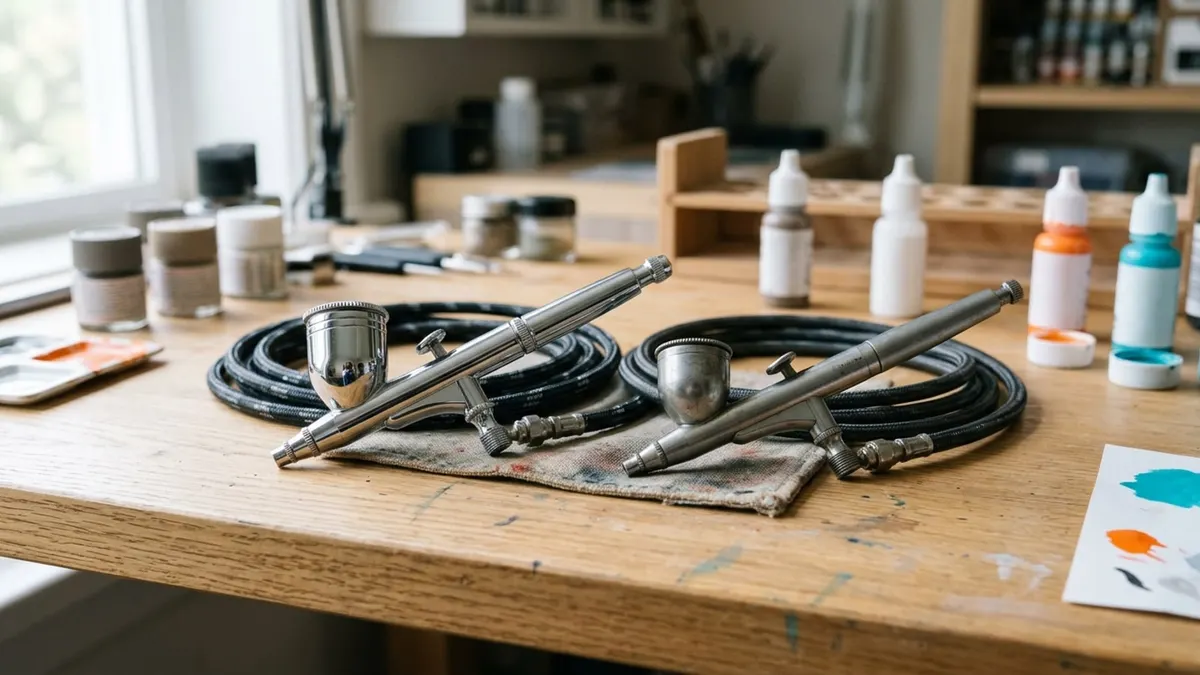
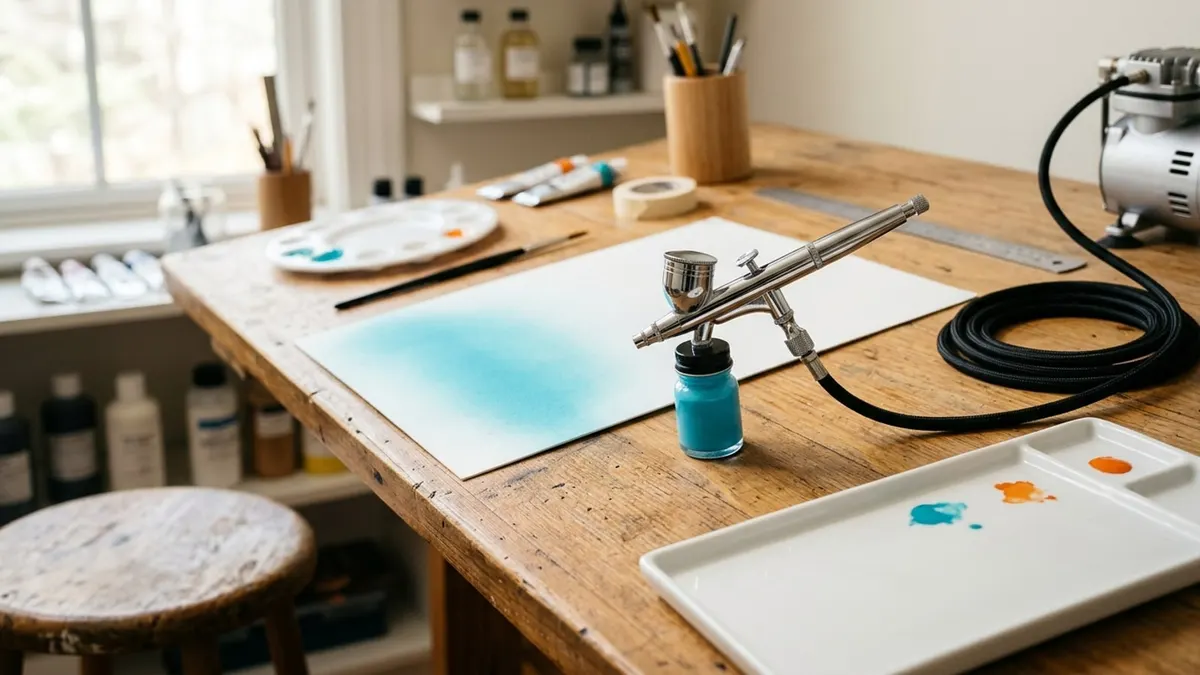
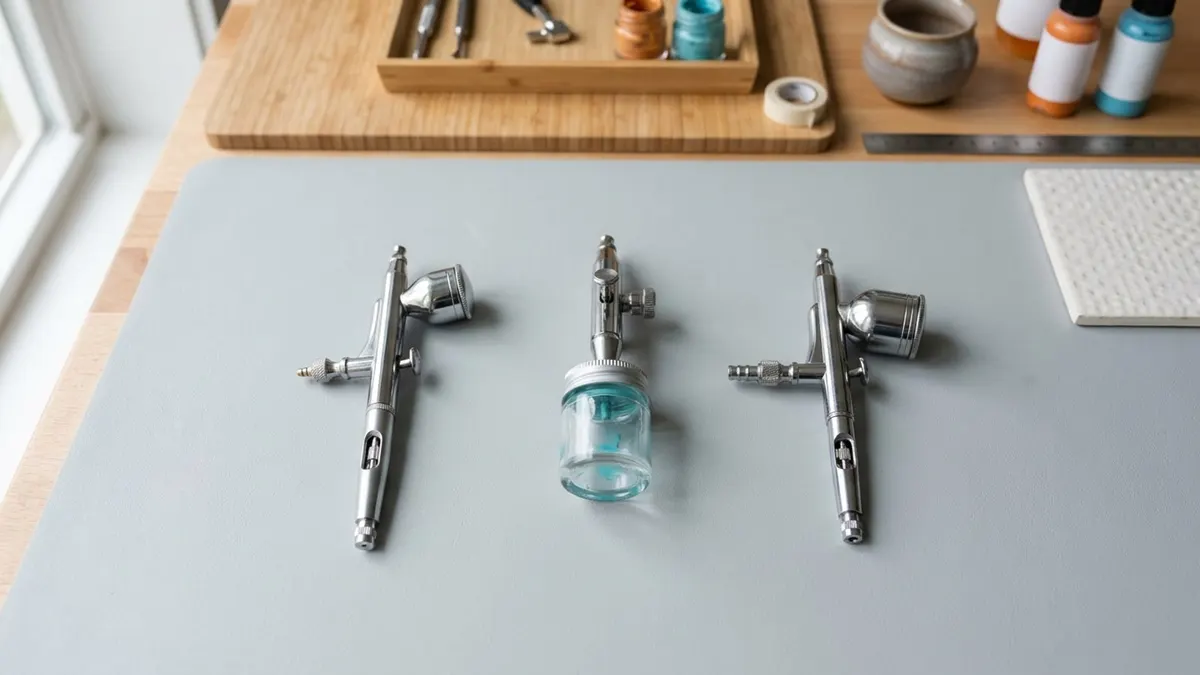
The four choices that define an airbrush, explained with the makers' own figures, and the type that suits each kind of painting.
Category
Airbrush kits, beginner sets and the main models, compared by nozzle, feed type and job.
The four choices that define an airbrush, explained with the makers' own figures, and the type that suits each kind of painting.
Five first airbrushes, from a $40 three-nozzle set to Harder & Steenbeck's own beginner model, with the compressor each one needs.
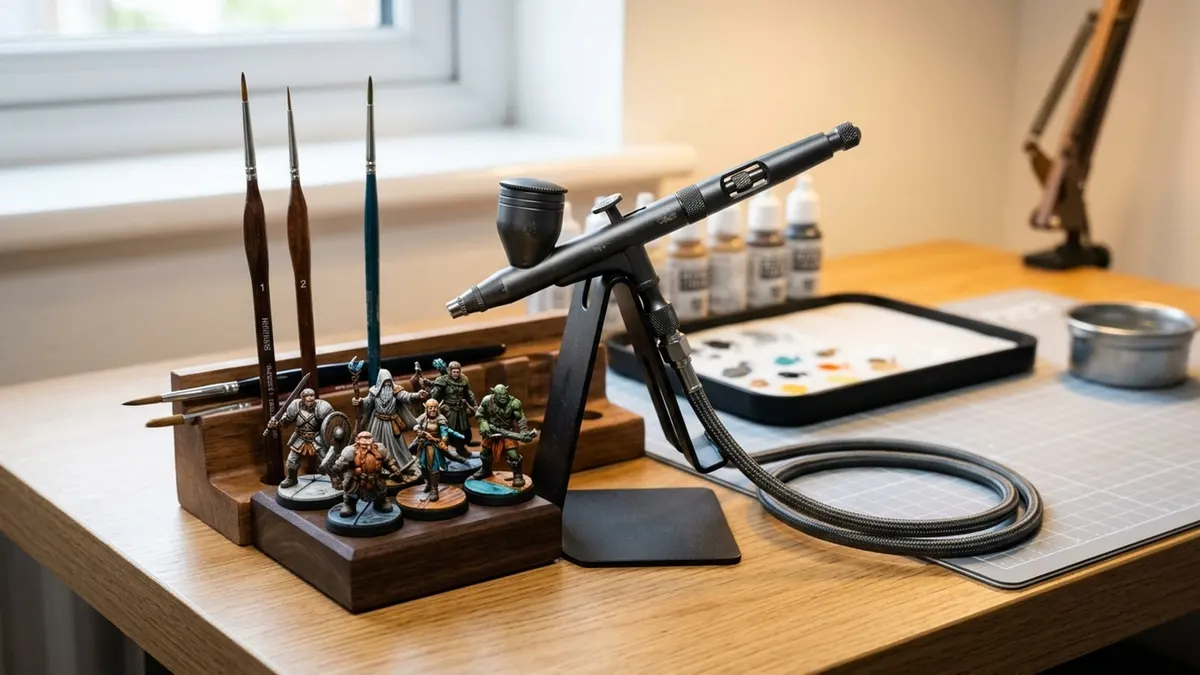
Five airbrushes for painting 28 mm figures and larger, from a 0.25 mm titanium detail airbrush to a two-nozzle budget set, with the paint and pressure to use.
Five airbrush and compressor sets for models, crafts, cakes and art, picked on the makers' specs and what each box actually contains.
Rechargeable airbrush kits for nails, cookies, touch-ups and painting on the go, with the trade-offs against a bench compressor laid out plainly.
Gaahleri sells modern features at low prices. Here is what each model offers, from the maker's pages and listings, and the warranty gap to know about.
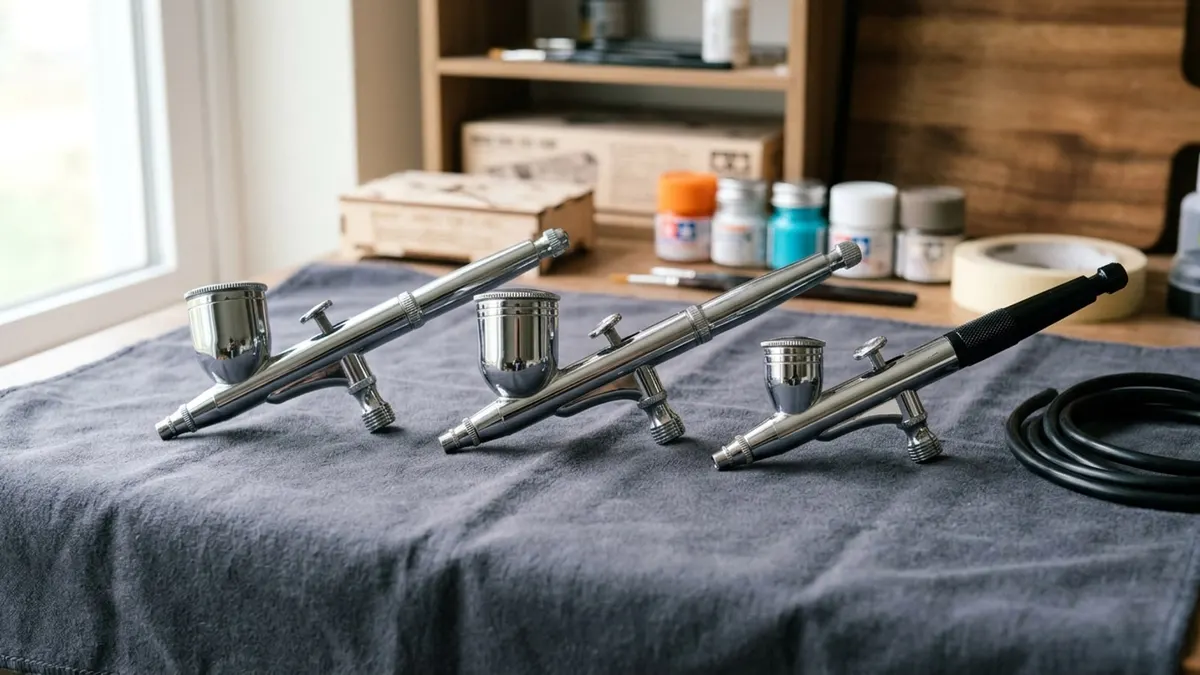
The three Harder & Steenbeck gravity airbrushes most people choose between, compared on the 2024 head sets, cups and the maker's own pitch for each.
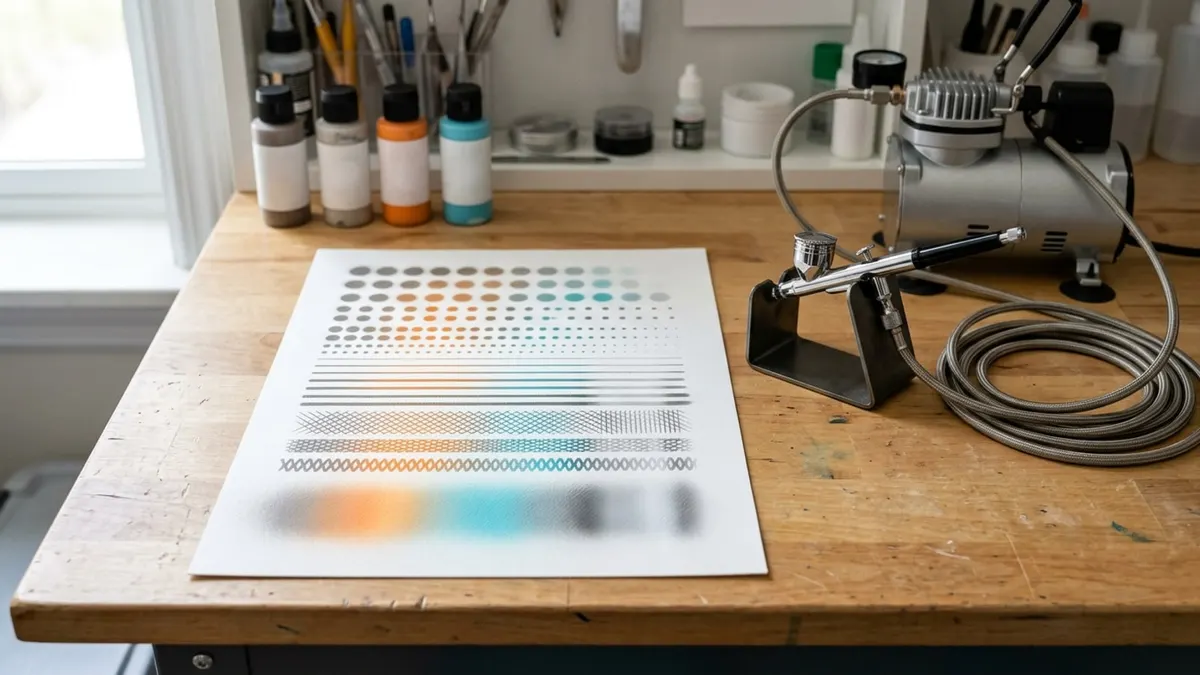
From a new box to a clean first coat: the setup Iwata describes, the trigger habit that prevents spatter, five practice drills and a troubleshooting table.
Iwata's all-round gravity airbrush, judged on Iwata's own specs: what the compression-fit nozzle changes, what compressor it needs, and who should buy something else.
Iwata's all-rounder against its beginner airbrush: the NEO sprays at 8 to 20 psi on a small compressor, the Eclipse takes thicker paint at 25 to 35 psi.
Paasche's three core airbrushes, all made in the USA: a gravity-feed detail model, a siphon-feed workhorse and a single-action classic.